
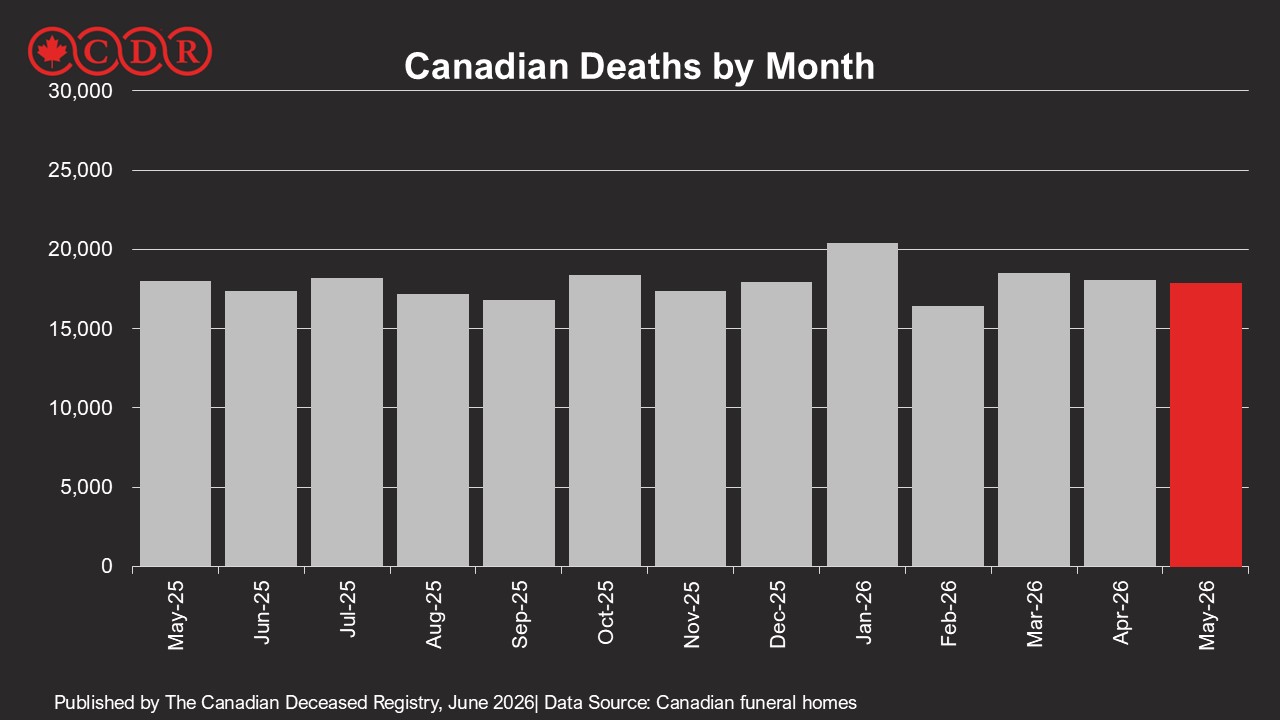
Canada recorded 17,817 deaths in May 2026, a slight decrease from 18,080 in April, representing a -1.5% month-over-month decline as mortality levels continue to normalize following the elevated winter season.
While the decline was modest, May marks the third consecutive month below January’s seasonal peak, reinforcing the broader trend toward more typical mortality patterns heading into the summer months.
Mortality Levels Continue Seasonal Decline
Mortality trends remain consistent with expected seasonal cycles:
- January 2026: 20,432
- February 2026: 16,434
- March 2026: 18,492
- April 2026: 18,080
- May 2026: 17,817
Following the winter peak in January and a temporary rebound in March, mortality volumes have gradually moderated through the spring, reflecting the easing of seasonal health pressures.
Ontario and Quebec Continue to Drive National Totals
The largest provinces continue to account for the majority of deaths reported nationally:
- Ontario: 6,904
- Quebec: 4,744
- Alberta: 1,414
- British Columbia: 1,407
Ontario alone represented approximately 38.8% of all deaths recorded nationally in May, underscoring the importance of maintaining comprehensive deceased identification coverage across Canada’s largest population centres.
Most Provinces Report Stable or Lower Mortality
While a few provinces experienced modest increases, overall mortality remained stable across most regions of the country.
Notable month-over-month changes included:
- Quebec: 5,025 → 4,744 (-5.6%)
- Alberta: 1,512 → 1,414 (-6.5%)
- British Columbia: 1,480 → 1,407 (-4.9%)
- Ontario: 6,802 → 6,904 (+1.5%)
- Manitoba: 732 → 809 (+10.5%)
The relatively small provincial movements suggest that mortality patterns have largely stabilized, with no significant national-level shifts emerging during May.
National Mortality Remains Below Long-Term Winter Highs
May’s total of 17,817 deaths remains significantly below the levels observed during peak winter periods.
For comparison:
- January 2026: 20,432
- January 2025: 25,284
- January 2024: 25,112
This continued moderation aligns with historical seasonal trends and reflects the lower mortality volumes typically observed during late spring and early summer.
What This Means for Data, Risk, and Compliance Teams
Mortality data isn’t just demographic—it’s operational.
Accurate and timely deceased identification remains critical for:
- Preventing fraud and overpayments
- Maintaining regulatory compliance
- Protecting brand reputation
- Improving database integrity
- Reducing returned mail and unnecessary outreach
Even during periods of lower mortality volatility, organizations must ensure deceased records are identified and updated continuously to maintain data accuracy and operational efficiency.
Bottom Line
May 2026 continued the gradual normalization of mortality activity across Canada, with deaths declining slightly from April and remaining well below winter highs.
For organizations relying on accurate consumer data, these trends reinforce the value of maintaining access to a National Canada-wide mortality database of deceased Canadians who’ve died or past-away, ensuring records remain current, compliant, and actionable throughout the year.
About The Data
The data presented in this report was summarized by the Canadian Deceased Registry™, Canada’s only national registry of deceased Canadians. To learn more about the database, submit your inquiry using our contact web form.
Distribution of the Canadian Deceased Registry™ is managed by Cleanlist, Canada’s largest customer data company. Through Cleanlist, you can license the Canadian Deceased Registry™ database or access it to clean, validate, and enrich the data you have.
